🚢What’s Happening?
China is quietly redrawing the world’s logistics map—and it’s not just about exports. From inland railways to distant ports, a new web of shipping routes is forming under Beijing’s watch.
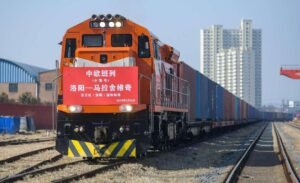
- China–Europe Railway Express is moving goods from inland provinces like Xi’an and Henan to Germany in about 15 days.
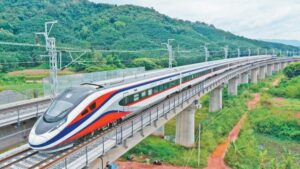
- Southeast Asia rail links are connecting Yunnan to Laos, Thailand, and Vietnam.
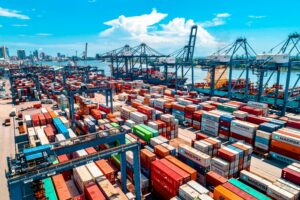
- A new mega-port in Chancay, Peru cuts shipping time to South America by nearly one-third.
- China has invested in 78 port projects across 32 African countries, building a logistics network that anchors one-third of the continent’s port infrastructure.
These aren’t just trade routes—they’re strategic corridors for resilience, influence, and long-term presence.
🧭 The Bigger Picture: Belt and Road Reloaded
First announced in 2013, China’s Belt and Road Initiative (BRI) set out to connect Asia with Europe, Africa, and beyond through massive infrastructure projects. A decade later, it’s shifting from vision to muscle.
- In 2024, China’s trade with BRI partner countries reached 22 trillion yuan (about $3 trillion USD), up 6.4% year-on-year.
- That’s more than 50% of China’s total foreign trade—the highest share since BRI began.
BRI has become less about headlines and more about hardware—rail lines, port stakes, and shipping shortcuts.
🌍 Why This Matters Now
- Geopolitical Pressure: Rising U.S.-China tension makes old routes (like LA–Panama) vulnerable.
- Tariff Shocks: New U.S. tariffs are making it harder for other countries to trade with America — pushing more business toward China and deepening its role in global supply chains.
- Infrastructure Diplomacy: Ports and railways are the new embassies.
🔧 How It’s Working
- Modular control: Instead of owning full supply chains, China builds key nodes—a rail hub here, a port stake there.
- Diversification: Not only one route or one continents, but many
- Speed + Certainty: Shorter transit time, fewer choke points.
Shipping is no longer just a tool of commerce—it’s a language of power. And China isn’t just moving goods—it’s moving the center of gravity.