🚄 What Is the China-Europe Express?
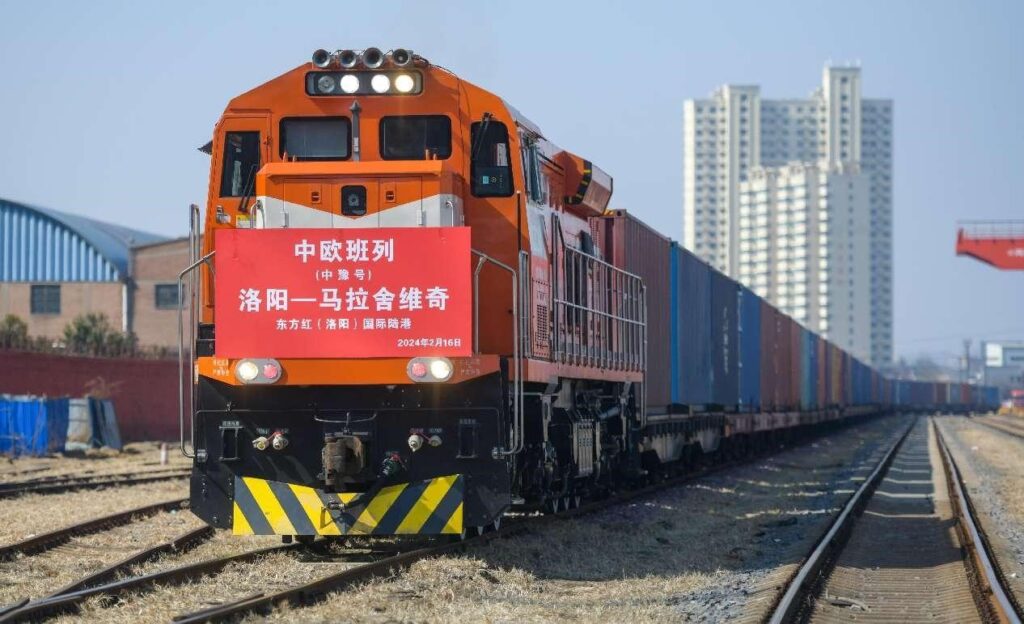
The China-Europe Railway Express (中欧班列), which first began operation in 2011, is one of the world’s largest freight rail systems—connecting over 200 destinations across Europe, Central Asia, Russia, and South Asia. More than just one line, it’s a sprawling and adaptive network of land-based trade arteries.
The system can be broadly divided into three strategic corridors:
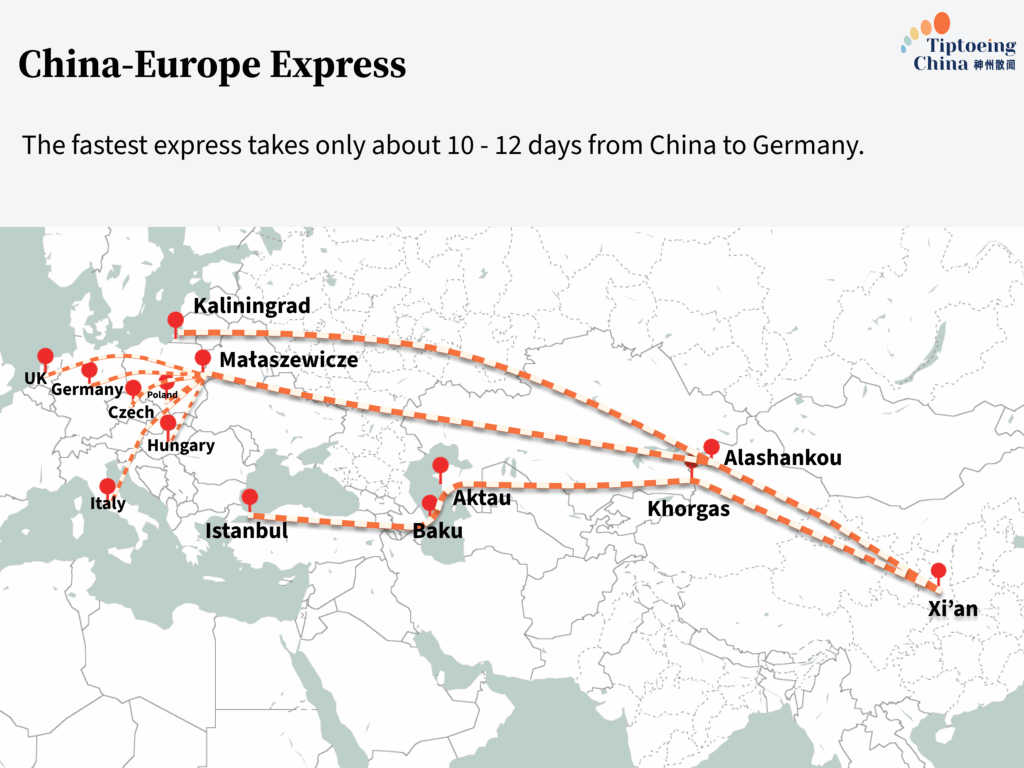
- China–Europe Core Line
- This is the most established corridor, running west from both inland hubs like Xi’an, Zhengzhou and coastal cities like Shenzhen to major European logistics centers via Khorgas, Alashankou, or the Baku–Istanbul axis.
- Trains typically enter Europe through Małaszewicze (Poland) or Istanbul, then branch to Germany, France, the Netherlands, and Southern Europe (e.g., Milan, Budapest, Verona).
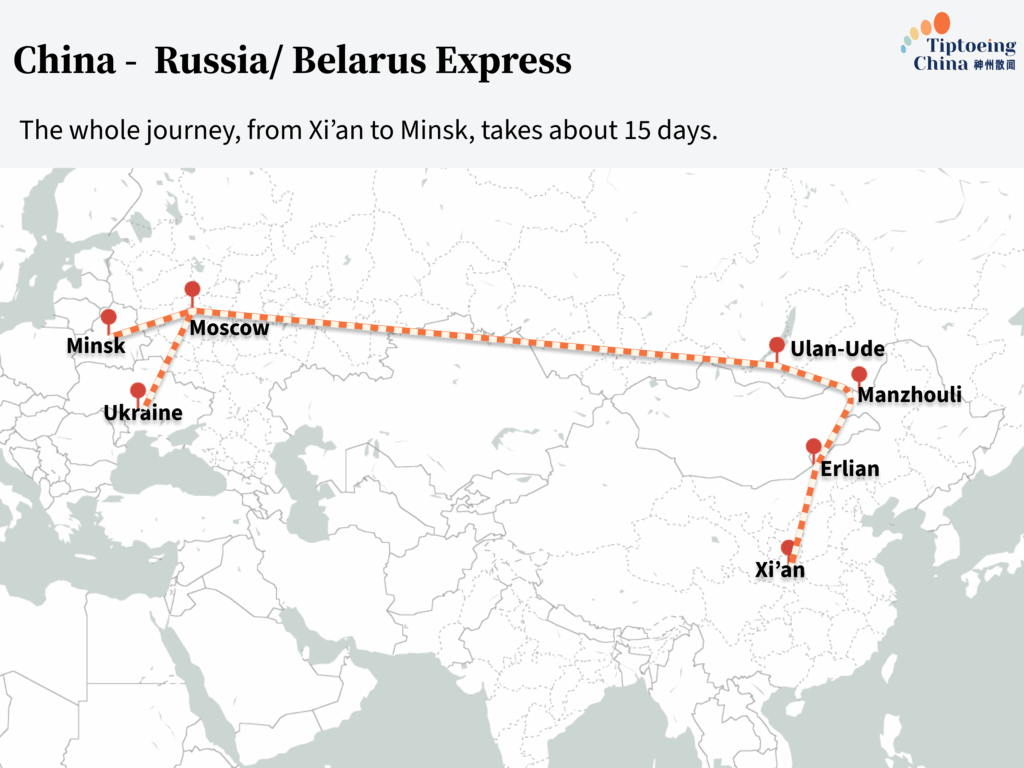
- China–Russia / Belarus Line
- This northern route enters Russia and Belarus via Erenhot or Manzhouli, moving toward Moscow, Minsk (Belarus), and onward to Eastern and Northern Europe.
- It’s especially critical for energy equipment, auto exports, and infrastructure goods, but has seen recent challenges due to sanctions and regulatory pushback.
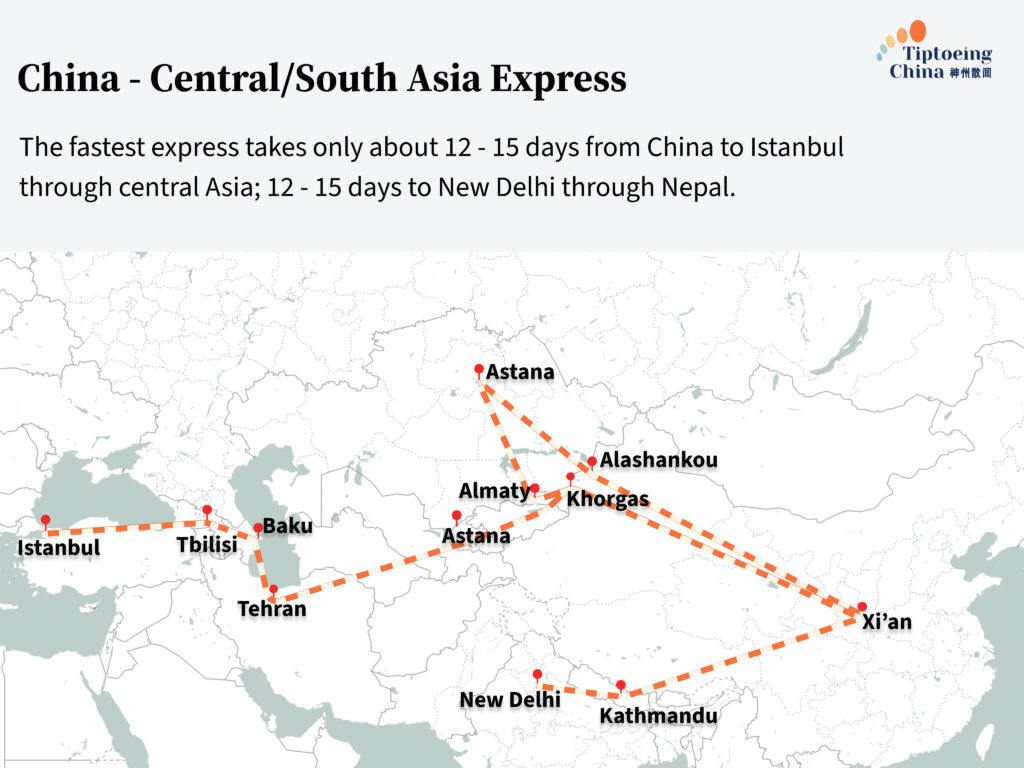
- China–Middle East / South Asia Line
- Heading southwest from Khorgas or Alashankou, this corridor connects to Baku (Azerbaijan), Astana (Kazakhstan), and Istanbul (Turkey)—or branches south to New Delhi (India), Kathmandu (Nepal), and across Central Asia through hubs like Almaty (Kazakhstan) and Tashkent (Uzbekistan).
- It’s an increasingly important trade route for Chinese machinery, electronics, and industrial goods to the Global South.
These aren’t just trade routes—they’re customized lanes for regional influence and logistical resilience.
⏱️ Why It Matters
- Speed: Shipping to Europe by sea takes 30–40 days. Rail can cut that to 15–20 days.
- Certainty: Avoids ocean bottlenecks like the Suez Canal or LA Port congestion.
- Resilience: Helps Chinese inland cities like Xi’an, Chengdu, and Chongqing reach global markets—no coast needed.
📦 What’s Onboard?
The China-Europe Express isn’t only for containers—it’s a mirror of China’s evolving exports.
- Automobiles: Electric vehicles are now a headline item. In 2024, thousands of EVs rolled west on this track.
- Machinery + Electronics: Industrial machines, solar panels, white goods, lithium batteries.
- Consumer Goods: Furniture, clothing, footwear, toys, household electronics.
- Cross-border e-commerce packages: (especially on return legs to Europe) are rising fast.
As China moves up the value chain, so do the contents of its trains.
🛠️ How It Works
- Goods are consolidated both at inland dry ports, which are logistics hubs far from the coast, and at coastal ports that are fully integrated into international trade flows.
- Take the Zhengzhou Airport Economy Zone as an example. It’s home to major manufacturers like BYD and Foxconn, and serves as a key launchpad for westbound freight. Here, products such as machinery, auto parts, electronics, and apparel are assembled, packed into containers, and transferred directly onto China-Europe Express trains—often within hours of final production.
- These trains pass through key exit points like Khorgas, Alashankou, or Manzhouli, depending on the route.
- The entire journey is supported by end-to-end tracking systems and cross-border customs coordination platforms.
⚠️ What to Watch
- Geopolitical risk: Routes through Russia and Belarus are now politically sensitive.
- Volume volatility: Rail freight to Europe has shown significant swings in early 2025, with outbound trains from China dropping sharply—down 22.5% in Q1. Much of this decline stems from reduced Russian demand, customs restrictions, and growing friction over dual-use goods. In October 2024, EU announced sanctions on Chinese EVs may further pressure outbound volumes in the short term. Overall, the system remains highly sensitive to geopolitical shifts.
- Return cargo imbalance: More trains go west than return east with full loads.