🌍 What’s Happening?
While headlines often focus on China’s rail expansion through Eurasia, another transformation is quietly reshaping China’s presence to the south: a sprawling network of port investments across Africa. From Nigeria to Tanzania, China is laying down logistical anchors—deepwater ports, dredging projects, and trade corridors—that strengthen maritime routes and secure long-term influence.
As of 2025, China has been involved in 78 African port projects, across 32 countries, accounting for one-third of the continent’s port infrastructure.
⚓ Two Routes, Two Strategies
China’s shipping expansion into Africa isn’t built on a single route—it’s a continent-spanning web of connections. But two corridors illustrate the broader strategy well: one running westbound to Nigeria’s Gulf of Guinea, and another eastbound to Tanzania’s Indian Ocean gateway.
Here are two typical examples of how China reaches Africa by sea:
1. Westbound: China → Apapa (Lekki Port, Nigeria)
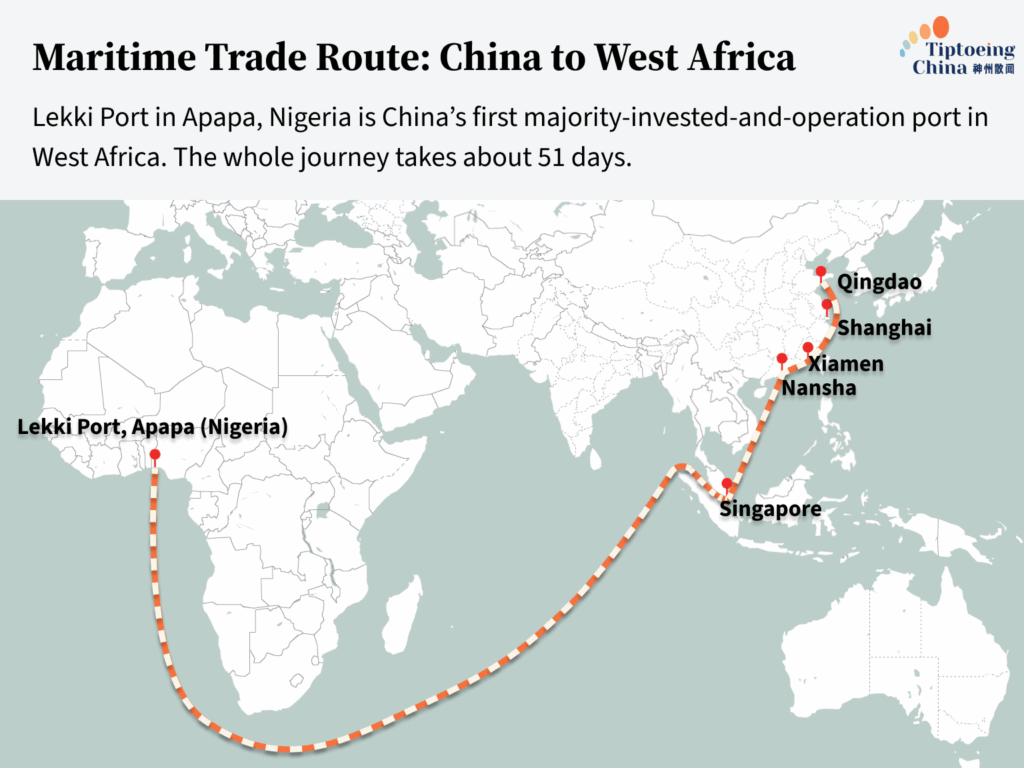
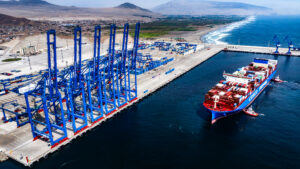
- Lekki Port is China’s first majority-invested-and-operated deepwater port in West Africa, located near Apapa, Lagos. Built and operated by China Harbour Engineering Company and financed by China Development Bank, it began commercial operation in April 2023.
- China Ocean Shipping Company runs a bi-weekly shipping line to West Africa using 12 vessels, stopping at Qingdao, Shanghai, Ningbo, Xiamen, Nansha, Singapore, then onto Lekki and other regional ports.
- What’s shipped:
- Outbound (China → Africa): Machinery, steel products, chemicals
- Inbound (Africa → China): Minerals, rubber, raw materials
- Transit time: ~51 days
According to China Central Television, Nigeria estimates that Lekki Port could generate $361 billion in GDP and create 170,000 jobs over its 45-year operating life.
2. Eastbound: China → Dar es Salaam Port (Tanzania)
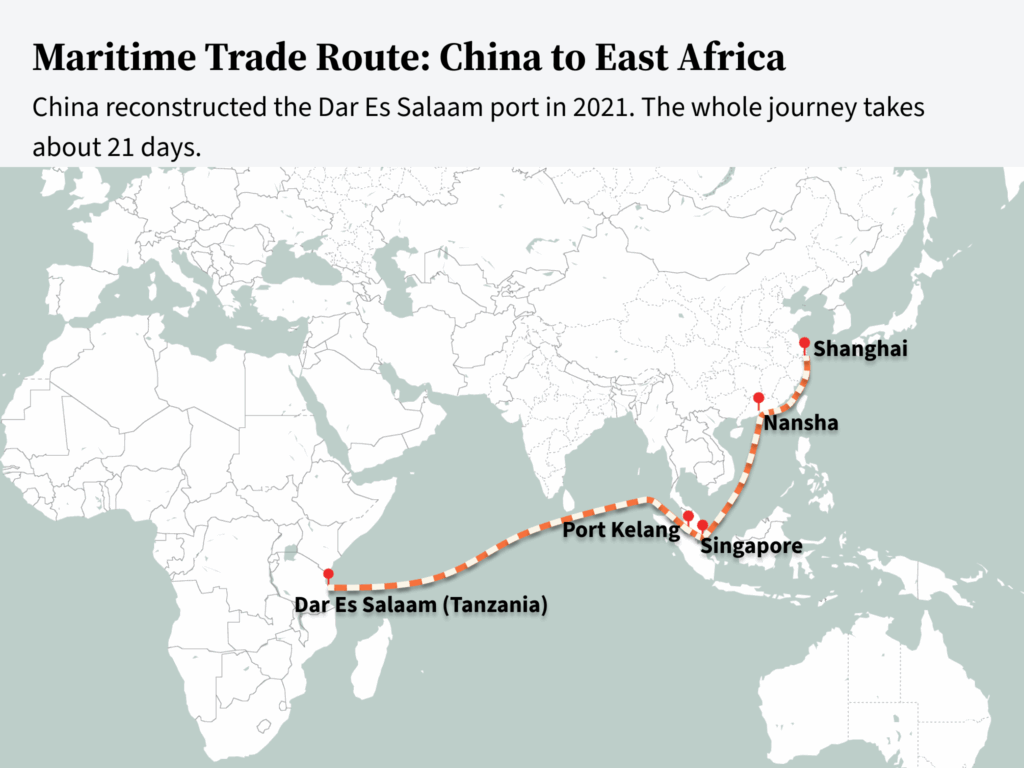
- Originally constrained by shallow, outdated channels, Dar es Salaam’s port was unable to meet regional demand.
- China began a dredging and reconstruction project in 2021, completed in March 2024, deepening the channel from 13m to 16m.
- Now able to handle 70,000-ton cargo vessels year-round (up from 20,000 tons), the port’s capacity and regional role have been dramatically upgraded.
- Transit time: ~29 days
- Dar es Salaam now serves Tanzania, Zambia, Rwanda, and DRC, anchoring China’s strategy for inland East Africa trade.
🧭 Why It Matters
- Strategic Coverage: China’s presence spans both West and East Africa, covering Atlantic and Indian Ocean trade lanes.
- Dual-Purpose Infrastructure: Projects serve both economic and geostrategic goals, strengthening BRI visibility across the Global South.
- Supply Chain Insurance: New ports reduce reliance on traditional Western routes and offset chokepoints in the Middle East or Europe.
A recent report by the Africa Center for Strategic Studies indicates “dependence on Chinese export infrastructure makes African countries amenable to supporting Chinese global interests.”
🛠️ How It Works
- Chinese state-owned enterprises act as financiers, builders, and operators.
- Ports often come with integrated industrial zones, customs fast lanes, or bonded warehousing facilities.
- Routes are coordinated with east-west shipping lanes, connecting via Singapore to China’s major southern ports like Ningbo and Shanghai.
📦 What’s Moving?
- Outbound from China: Equipment, construction materials, consumer goods
- Inbound from Africa: Minerals, timber, agriculture, oil, and rubber
- Growing trend: China Ocean Shipping Company and other Chinese carriers are expanding containerized cargo capacity for Africa-bound shipments
China’s maritime strategy in Africa isn’t just about port deals—it’s about building permanence. Through long-term investments and transit corridors, China is not only shortening distance—but reshaping direction.