
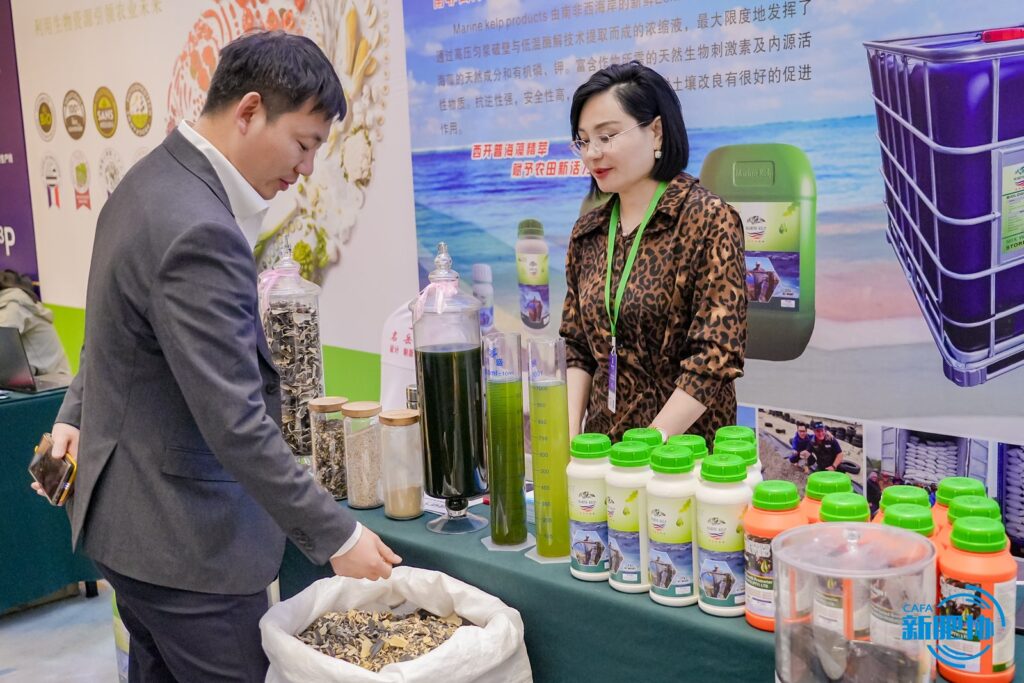
I never imagined that my first business trip would revolve around seaweed and aquaculture—and that it would bring me back to my home province, Shandong.
In the 1970s, my father studied relentlessly to escape the small rural town in Shandong he came from. His goal was to change his hukou—China’s household registration system—from rural to urban. That shift meant more than just a change in address; it promised access to better healthcare, education, and social welfare for himself and for me. It meant leaving behind the farming identity that, for a long time in China (and still now), was synonymous with poverty.
My dad is 56 now, but he still has nightmares about failing the college entrance exam and being forced to become a farmer—just like his father, his sister, the rest of our family, and generations before them.
For his generation, the fear of farming runs deep. Why? Take my aunt, for example. She’s 65, owns about one mu of land (about 0.15 acre), and grows peaches. Her annual income is less than $1,000 USD, and she doesn’t have access to the same medical care or pension benefits as people with urban hukou.
Before I left for the Second Seaweed Fertilizer Conference in Qingdao, she told me the peach harvest this year was a disaster due to drought. Extreme weather is becoming more frequent, driven by unsustainable agricultural practices—including how crops are planted and livestock are raised. For example, large-scale animal farming relies heavily on feed like soybeans, which contributes to deforestation and carbon emissions, further warming the climate.
I feel heartbroken for my aunt. She still has to work hard in the fields to help her son—my cousin—afford an apartment so he can get married (something about Chinese marriage I’ll explore more in future articles). Her livelihood is at the mercy of the weather, the climate, and the environment.
So I came to the conference with two questions: can seaweed help both inland and ocean farmers? Can seaweed protect our earth mama?
The answers are yes but we still have a long way to go.
Seaweed has a surprising range of applications—it’s used in industry, skincare, food, biostimulants, and livestock feed. To answer my two questions, I focused on three areas in this trip: biostimulants for farming, seaweed as a more sustainable option in livestock feed, and the edible food source as climate cuisine.
The last application—seaweed as food—is perhaps the easiest to implement in China. We’ve been eating seaweed for generations, long before many of us realized how environmentally friendly and nutritious it is. With zero fertilizer or feed input, seaweed grows naturally in the ocean, making it one of the most sustainable food sources available. In fact, it’s even more environmentally friendly than many plant-based foods like cereal grains, which require land, water, and chemical inputs to cultivate.
Nutritionally, seaweed is a powerhouse. It’s rich in iodine, calcium, iron, magnesium, fiber, and antioxidants, and it contains important vitamins like A, C, E, and several B vitamins. Yet despite all this, many people still overlook its value.
In contrast to the U.S., where some people think seaweed is slimy or strange, in many Chinese cuisines it’s a staple. One of my favorite dishes is kelp and pork soup—comforting, savory, and deeply rooted in home cooking. Sea lettuce salad is a refreshing summer appetizer. And of course, seaweed is also a beloved snack. Anyone who grew up in China knows 波力海苔 (Boli Nori)—ask any Chinese kid, and they’ll instantly recognize the brand.
That’s why, as the largest producer of seaweed in the world, China’s seaweed industry is dominated by kelp, which accounts for 51% of total production, followed by Eucheuma, at around 20%. The majority of seaweed products exported from China are edible, including seasoned laver, salted kelp, salted wakame, and dried laver.
Another two – seaweed biostimulant and livestock feed – are the focus in the conference, also what I concern the most.
In China, seaweed biostimulant companies focus on processing rather than raw harvesting. They typically import seaweed from countries like South Africa, France, Peru, Canada, and Australia (not in order of volume), extract liquid compounds, and turn them into biostimulant products and livestock feed. These are sold both domestically and exported—mainly to Southeast Asia, with limited reach into North America.
The types of seaweed used for biostimulants and livestock feed include Macrocystis pyrifera (giant kelp, 巨藻), Ascophyllum nodosum (knotted wrack, 泡叶藻), Laminaria japonica (kelp, 海带), Sargassum species (马尾藻), and Durvillaea species (bull kelp, 公牛藻). Many of these species aren’t found in abundance in China, and cultivated kelp like Laminaria japonica, though widely grown, typically contains lower levels of bioactive compounds (活性物质), making it less suitable for biostimulant production. Wild-harvested seaweed, by contrast, tends to have higher concentrations of these active ingredients.
Some Chinese companies have also established basic processing facilities overseas, where seaweed is dried and ground before being shipped back to China for final processing and extraction.
The environmental benefits of seaweed in agriculture and animal feed are clear. Unlike soybeans—which require large areas of land, significant chemical input, and have been linked to deforestation—seaweed grows without fertilizers, freshwater, or arable land, and helps sequester carbon rather than emit it. In fact, soybean farming contributes significantly to deforestation—often more than transportation emissions in certain regions—so using seaweed could be a far greener alternative.
But when I brought this up to my aunt, she had never even heard of seaweed-based biostimulants, let alone used them. Domestic demand in China both in agriculture and animal husbandry remains underdeveloped.
Major barriers are price and awareness—seaweed biostimulants are generally more expensive (for now) than traditional chemical fertilizers. For smallholder farmers like my aunt, who live on razor-thin profit margins, it’s hard to justify the cost of something unfamiliar, especially when they haven’t seen clear examples of its effectiveness. Many of them rely on government-subsidized fertilizers or low-cost chemical options that promise quick results, even if they harm the soil in the long run.
There’s also a gap in awareness. Seaweed-based solutions are still seen as niche or experimental in much of rural China. Without trusted local demonstration projects, education campaigns, or policy support, it’s unlikely that farmers in places like my hometown will adopt these greener alternatives anytime soon.
Another challenge I learned about at the conference is the lack of industry standards. From extraction methods to testing protocols, the seaweed biostimulant industry in China still lacks a unified framework. Without clear standards, it’s hard to build trust or scale innovations.
I had a wonderful time at the conference. To my surprise, my home province—Shandong—is actually a central hub for China’s seaweed industry, thanks to its long coastline and deep-rooted history in both aquaculture and agriculture. Most of the people I met spoke the same dialect I grew up hearing from my dad. I even joked with my coworker from Singapore that if they’d sent anyone else, they might not have understood a word.
One thing that really struck me was the demographic makeup of the attendees. Many were founders of fertilizer companies, seaweed scientists, and aquaculture scholars—mostly middle-aged men around 50. Many of them were the first in their families to attend college, often studying agriculture, and then returning to the land to start their own businesses. They are part of the first wave of private agricultural entrepreneurs after China’s economic reforms (改革开放).
I felt an unexpected closeness to them. Their stories reminded me of my dad—deeply connected to the land, driven by the hope of improving life for farmers, because they and their families are farmers. That sense of rootedness is powerful.
But it also left me wondering: what role will younger generations play in this industry? Bren Smith, author of Eat Like a Fish, wrote that if just 5% of U.S. coastal waters were used for ocean farming, it could create millions of jobs and offer new opportunities for blue-collar workers and traditional farmers.
I don’t know what the answer is for China yet. But I hope more young people will see a future in this field—not just because it’s innovative or promising, but because it’s essential. This is the kind of green future we should be building—one that grows from the sea, the land, and the people who care for both.
——